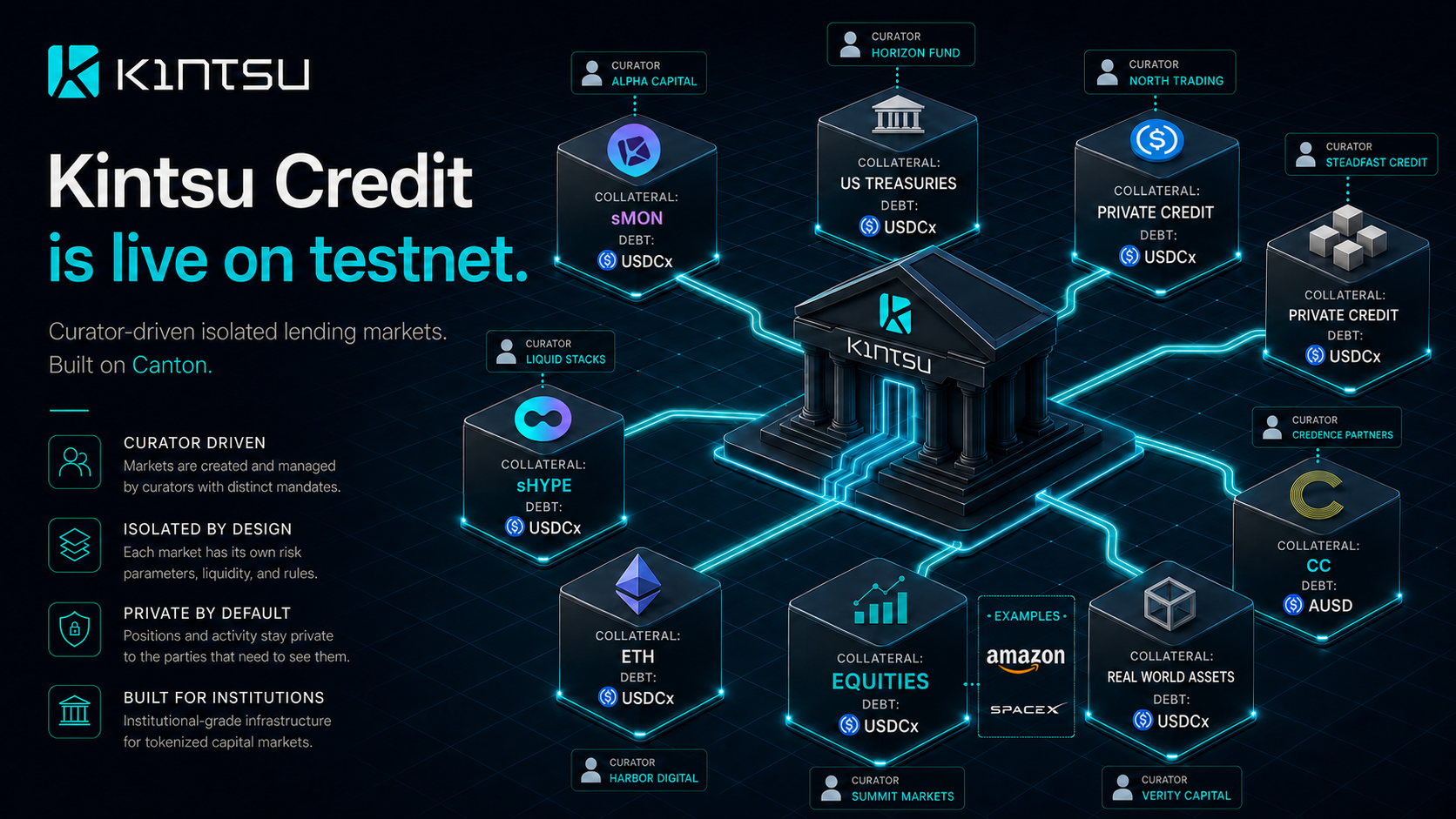
LST Use Cases - Decentralized Stablecoins

We have been exploring different DeFi applications for which LSTs can provide liquidity. Another great example are decentralized stablecoins, like MakerDAO’s DAI. Unlike centralized stablecoins, such as USDT and USDC — which are issued by Tether and Circle, respectively, and backed by dollar reserves held by these centralized entities — decentralized stablecoins are backed by crypto assets and are managed by protocols, keeping them fully decentralized. On Monad, Kintsu LSTs will be the single best collateral for decentralized stablecoins.
Money market borrow-lend protocols, such as Aave, Compound, and Curve, are decentralized platforms that facilitate the lending and borrowing of digital assets. These protocols enable users to earn interest on their crypto holdings by lending them out, or to borrow assets by providing collateral.
Decentralized stablecoins are designed to maintain a stable value relative to a fiat currency, typically the US dollar, through decentralized mechanisms. Unlike centralized stablecoins, which are backed by reserves held by a central entity, decentralized stablecoins are managed by protocols and backed by crypto. These stablecoins are essential in the DeFi ecosystem as they provide one of the primary, if not the #1, medium of exchange across DeFi.
Decentralized stablecoins achieve stability through overcollateralization. Overcollateralized stablecoins, like Dai from MakerDAO, require users to lock up a certain amount of crypto in a smart contract to mint new stablecoins. The value of the collateral must exceed the value of the issued stablecoins, providing a buffer against market volatility. If the collateral value falls below a certain threshold, automatic liquidation occurs to maintain the peg.
Decentralized stablecoins offer several advantages, including censorship resistance, transparency, and greater alignment with the principles of decentralization. Most price discovery is still marked relative to fiat, so stablecoins are important in giving users positive UX. However, because they need to be overcollateralized, decentralized stablecoins are notoriously capital inefficient. In the early days of a chain, it is very difficult to bootstrap liquidity, and overcollateralizing stablecoins in not capital efficient.
sMON: The Ideal Collateral for Monad Stablecoins

Kintsu LSTs solve this problem for Monad perfectly. They will be the best stablecoin collateral because of two reasons. First, early on in Monad’s lifetime, there will be less use cases on the network in the rest of DeFi, so liquid staking will be the first way to get yield and thus sMON will be abundant early on. Second, sMON will represent the value of MONAD as well as the yield of staking. Because they are yield bearing, Kintsu LSTs are the best collateral for stablecoins that need to be overcollateralized.
Conclusion
Kintsu LST — sMON, offer a unique advantage as collateral for decentralized stablecoins on Monad. As Monad grows, stablecoins backed by Kintsu LSTs will be well-positioned to address liquidity needs and capital efficiency. With yield-bearing properties, sMON not only supports overcollateralization but also actively contributes to a resilient and self-sustaining stablecoin ecosystem. As the primary collateral for stablecoins, Kintsu’s LSTs are poised to elevate Monad’s DeFi landscape, creating a stable and decentralized foundation for future growth and innovation.
Follow our social channels to stay up to date on everything Kintsu!
• Discord
• Medium